
seeing like a state
Thoughts and quotes on high modernism I hold onto loosely after reading James C. Scott (1998)

It took me a good couple of weeks to get through it, and probably even longer to go back and collect the quotes and jot down my thoughts. But the book was so worth it. Seeing Like a State argues, put simply, that some states have historically failed their people out of a particular kind of blindness driven by a compulsion to simplify, standardize, and make legible everything complex, local, and alive, and in doing so, destroy the very thing they were trying to improve. Aka, high modernism. Here is an organized mess of some of my thoughts: 10 rapid-fire takeaways from the book, 3 examples of areas to which high modernism was applied, and 1 final quote.
10 rapid-fire takeaways from the book
It takes a long time to build up social capital, it’s easy to destroy. It accumulates through repeated, low-stakes interactions whose value can go unnoticed in advance, but is destroyed by a singular, highly legible intervention.
Diversity is often seen as more costly for a state than uniformity, administratively. There’s thus an incentive to homogenize.
“Monocultures are, as a rule, more fragile and hence more vulnerable to the stress of disease and weather than polycultures are.” An interesting parallel to be drawn there might be with the diversity of thought.
[related to #3] When systems are diverse, shocks remain local, but when systems are homogenous, shocks can synchronize and magnify. Regarding the diversity of thought, this increases the risk that everyone is wrong at the same time.
An eloquently put reminder of why descriptive stats are insufficient: “The farmer rarely experiences an average crop, average rainfall, or an average price for his crops.”
[related to #1]: Not only is social capital slow to build up and quick to be destroyed: how fragile it is may depend on whether a city is thick or thin. One can design a thin city, but you can’t design the habits and lived intelligibility that make a thick system resilient. A thick city has dense, overlapping networks of informal life and is built from the bottom up, not handed down.
[related to #6] Esperanto as a language might partially have failed/solely survived as a kind of “utopian curiosity” because it’s a thin dialect, lacking “resonances, connotations, ready metaphors, literature, oral history, idioms, and traditions of practical use that any socially embedded language already had.”
“None of the historical participants in, say, World War I or the Battle of the Bulge, not to mention the Reformation or the Renaissance, knew at the time that they were participating in anything that could be so summarily described.” I love this quote though I’m not exactly sure what lesson to draw from it. The labels we use for history are retrospective fictions? Or humility about the present is warranted?
[related to #2] Spontaneity = complexity = disorder (or, anti-centralized order) = costly for a state. Spontaneity can look like one of the state’s natural enemies, especially in a high-modernist mood, because it produces messy, local, improvised solutions that refuse to be easily directed or controlled.
[related to #9] The words “mass” and “masses” can carry a dangerous connotation: pure quantity, numbers without order. “Nothing better conveys the impression of mere quantity and numbers without order than the word ‘masses.’” And once people are reduced to masses, they start to sound like material to be directed: unconscious, irrational, prescientific, spontaneous, valued for weight rather than judgment, and treated as perpetually at risk of being “contaminated” by whatever the official ideology deems outside the lines.
Example 1: The Forest
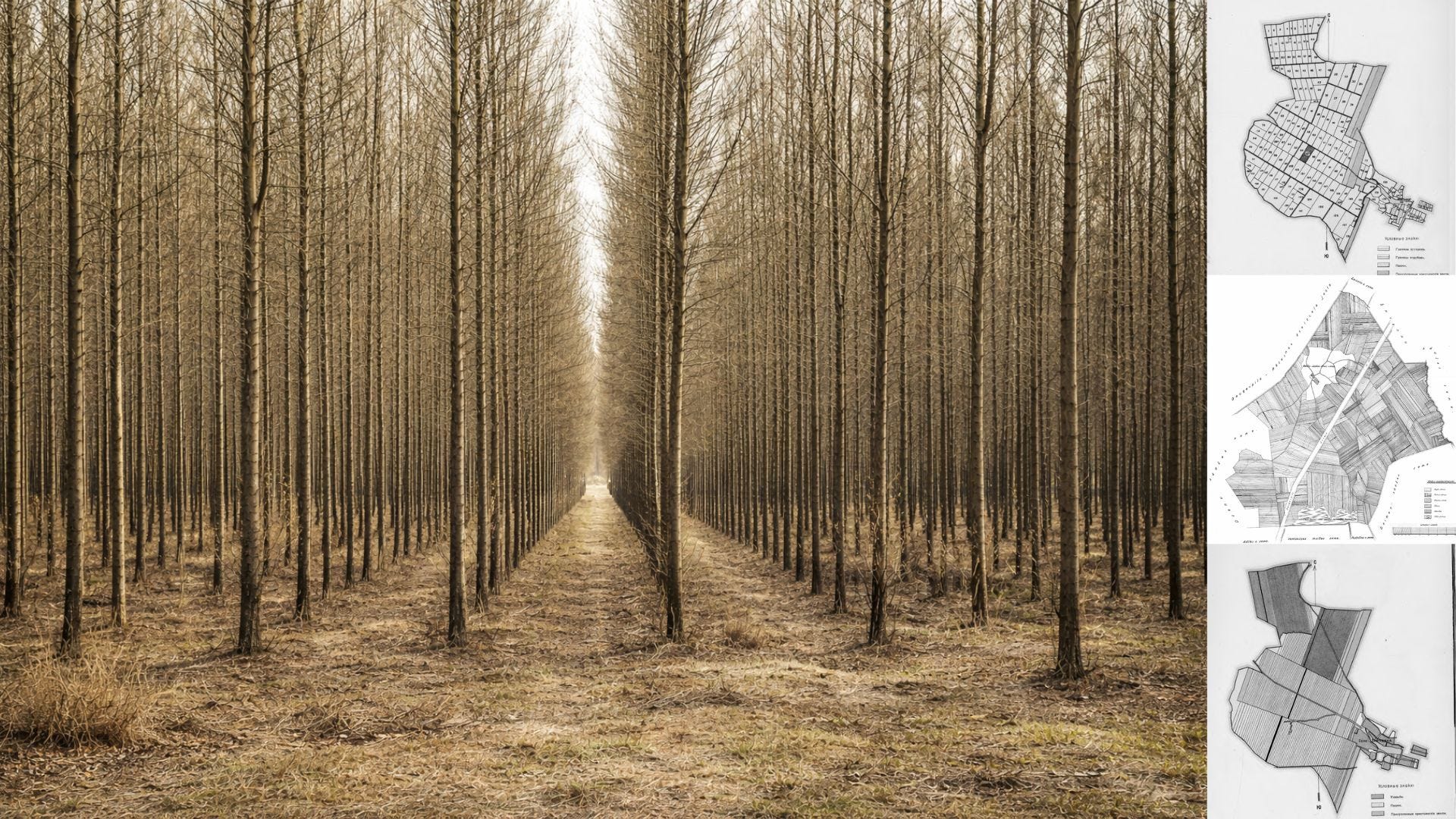
Only a society that manages to kill an entire forest would have to invent a word for it. In this case, that society is Germany, and the word is Waldsterben (meaning: forest death).1
In the late 18th century, German foresters saw their forests being wild, tangled, ecologically dense and hard to get through, full of dead wood, moss, insects, birds, and a thousand other things that weren’t timber. And timber was the one thing they were trying to optimize for. The forest through the German lens looked like inefficiency, everywhere. So, they did what rational, scientific-minded people do: they started simplifying. They cleared the undergrowth, removed dead wood, extirpated all that seemed irrelevant. In its place, they planted neat rows of especially fast-growing species of woods (mainly Norway spruce). It looked great: orderly, legible, and measurable. And best of all: the yield greatly increased!
For one generation.
No one today will be surprised by this, but then the soil collapsed, insects moved in again, the birds that had eaten the insects were gone because the ecosystem that sustained them had been destroyed. The forest was stripped of its complexity and left without a base to fall back on. Stripped of complexity, too, was the language:
The forest as a habitat disappears and is replaced by the forest as an economic resource to be managed efficiently and profitably. Thus, plants that are valued become “crops,” the species that compete with them are stigmatized as “weeds,” and the insects that ingest them are stigmatized as “pests.”
The foresters weren’t malicious in their intent. They saw what was of interest (timber), measured it, and optimized for it. Everything that couldn’t be measured was ignored. And everything that was ignored turned out to be essential for that very object of interest they were trying to isolate.
This is a pattern that Scott keeps pointing out in Seeing Like a State. The forest as habitat and environment becomes the forest as a resource. Then, such a complex living thing gets replaced by an abstraction of itself, cleaner, more legible, easier to manage and act upon. This abstraction, removed from the reality it was meant to represent, falls apart, and in falling apart, takes the very thing it was meant to improve down with it.
Example 2: The City
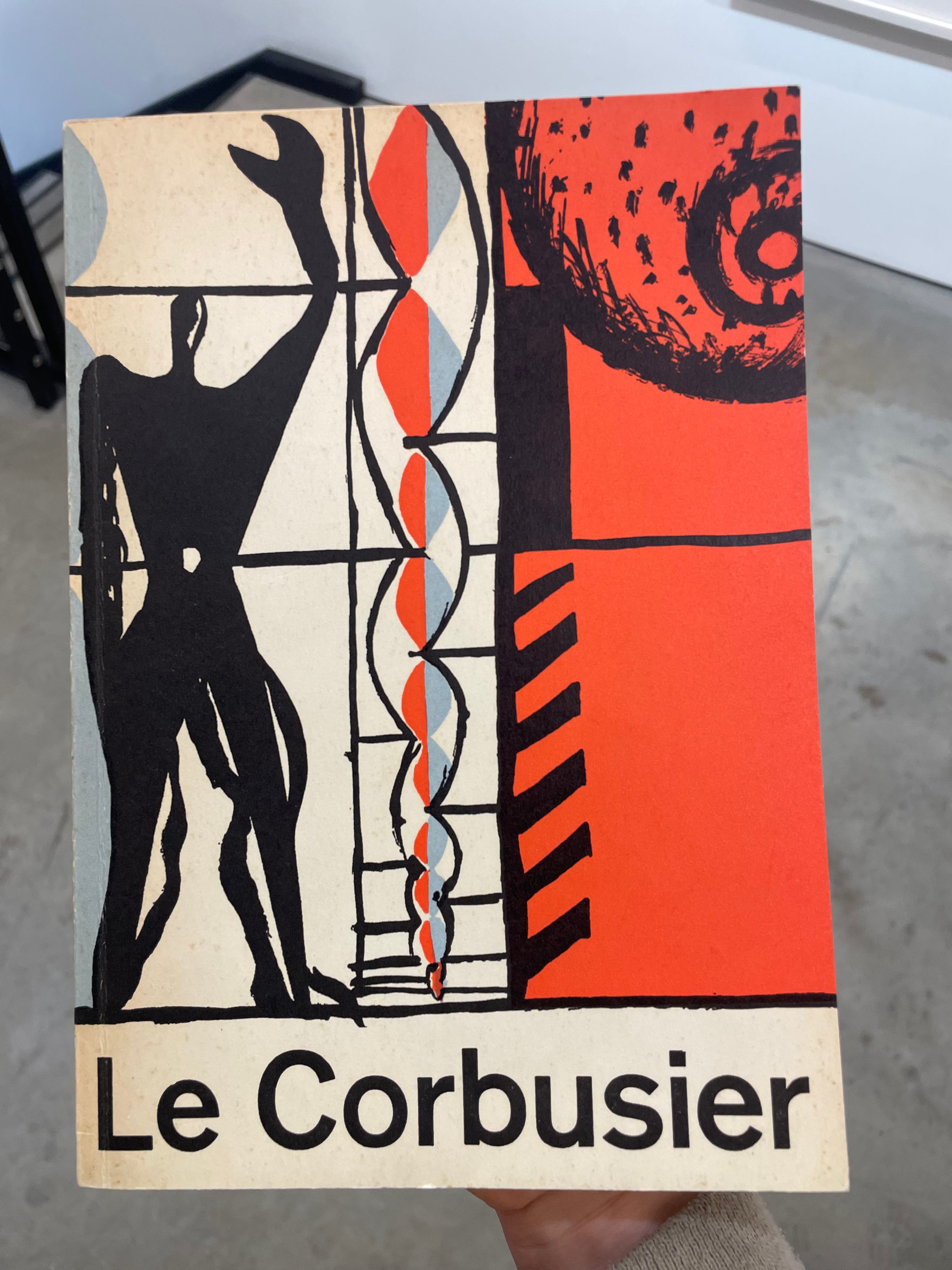
I picked up a Le Corbusier retrospective in a New York art bookstore recently2, which was full of vertical lines, reinforced concrete, steel, and prose that treated this Swiss-French architect and urban planner like he had basically invented modernism. I was surprised to see him celebrated by some as a pioneer of modernist architecture.
My prior context on Le Corbusier was from Seeing Like a State. And he surely isn’t celebrated by Scott. Treated less as an isolated figure and more so as a representation of high modernism, the architect is depicted as a designer obsessed with how social life can be rationally and radically ordered only if it were cleared from its historical clutter and rebuilt according to scientific principles.
Le Corbusier is best known for his radical vision of the “modern” city. Cities needed to be coherent, efficient, disciplined, designed from above, and according to universal rules, rather than grown from below through habit, use, and (worst of all) spontaneity. When Googling Le Corbusier, one of the first terms that comes up is functionalism, which is captured neatly by his two most famous, pithy quotes: “a house is a machine for living” and “a curved street is a donkey track, a straight street, a road for men.” He took this kind of functionalism quite literally.
His objection to the slums was twofold. First, they failed aesthetically to meet his standards of discipline, purpose, and order. “Is there anything,” he asked rhetorically, “more pitiful than an undisciplined crowd?” Nature, he added, is “all discipline” and will “sweep them away” even if nature operates by a logic “contrary to the interest of mankind.”
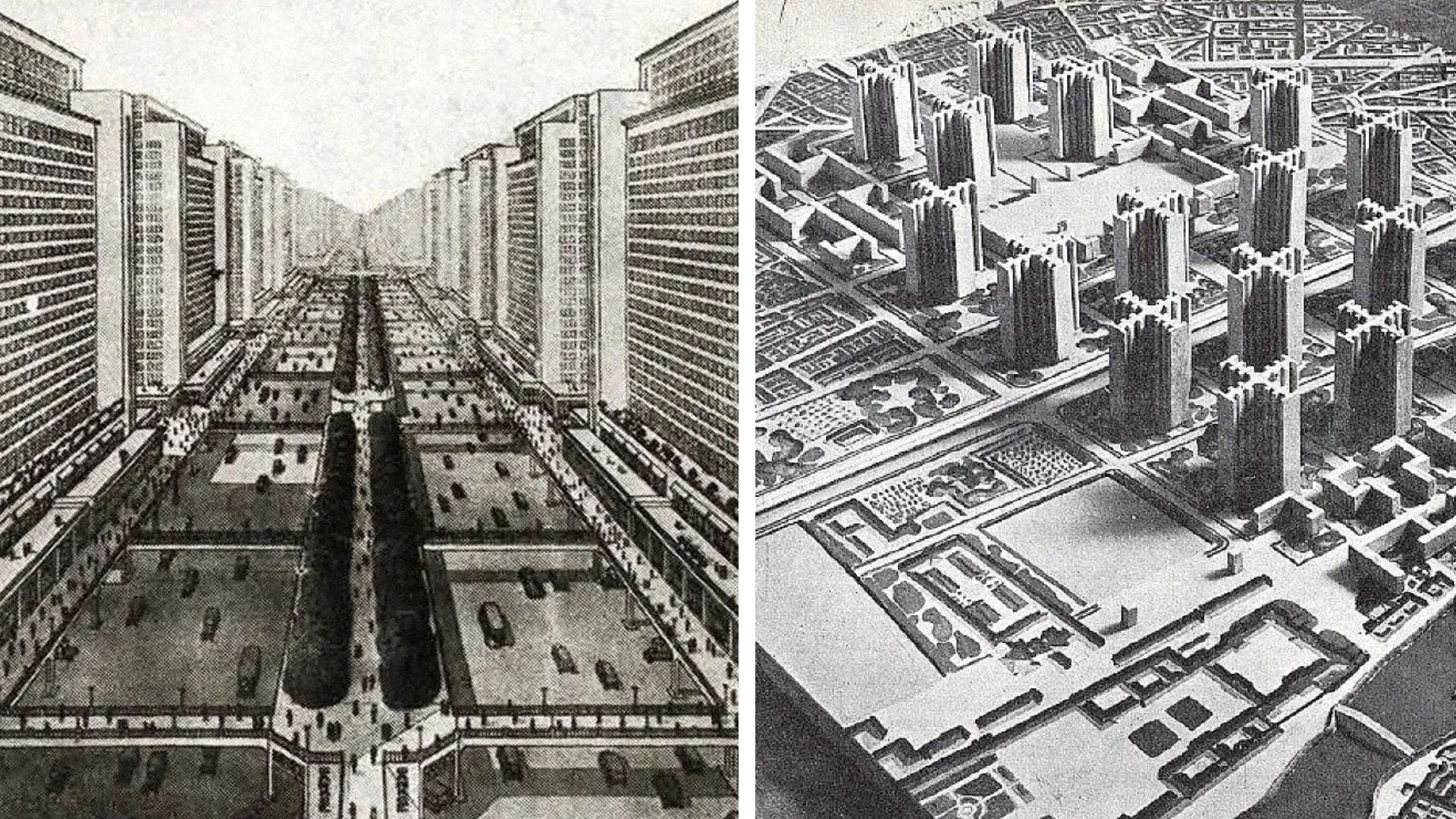
Let’s look at some example works of his:3
He built Unité d’Habition in Marseille (literally: Housing Unit), completed in 1952. A single concrete block, housing 1,600 people with its own internal street with shops, school, gym, and rooftop running track. The idea was total self-sufficiency. A neighborhood compressed into a single structure with social interactions engineered rather than left to chance. The corridors, dark and long. The apartments looking out over either the mountains or the sea, never over the street, because streets, in Le Corbusier’s vision, were for cars (functionalism, again). It was an attempt to produce a repeatable, mass-producible housing unit.
Chandigarh, the Indian city, became the fullest realization of his vision of the planned and structured city. Wide boulevards, strict zoning, monumental government buildings set in open plazas. It was clean, ordered, and, by most accounts of people who actually lived there (and unsurprising to many) oddly lifeless. The plazas were too large to feel like one is human and the distance between buildings was too great to walk. Its Eurocentric and high modernist layout sacrificed organic Indian street life for a rigid, car-dependent, and oversized monumentality.
Scott claims Brasilia4 was the endpoint of Le Corbusier’s vision. A city built from a blank slate, “liberated” entirely from the inconvenience of history. Its planner, Lúcio Costa, literally drew it in the shape of an airplane when seen from above. The city was designed to be legible in its totality and from above it was coherent and some would say even beautiful. The problem, as Scott notes, is that this is exactly how high modernism always sees: from above, from outside, from a position no one who ever lived there could actually see the city.
According to Scott, Brasilia had no corners to linger on, no cafes that had accumulated organically over decades, no neighborhoods that had developed their own character through use. A dark twin grew almost immediately alongside the actual city: a shadow city with informal settlements and unplanned neighborhoods.
Strip away complexity and what remains is constraint. Life doesn’t unfold in orderly, linear ways but instead arises from spaces that allow natural social interaction to happen. And isn’t “natural” precisely the opposite of concrete and straight lines? Le Corbusier didn’t think so. He distrusted the masses and had little patience for spontaneity, which may explain why his writing was seen as sympathetic to authoritarianism and totalitarian (urban) control. The city, for him, was a problem to be solved and not a culture to be tended.
These projects, thus, as Scott observes through Jane Jacobs, all share the same core mistake of high modernist planning:
A fundamental mistake that urban planners made, Jacobs claims, was to infer functional order from the duplication and regimentation of building forms: that is, from purely visual order. Most complex systems, on the contrary, do not display a surface regularity; their order must be sought at a deeper level. “To see complex systems of functional order as order, and not as chaos, takes understanding.”
Example 3: The Body
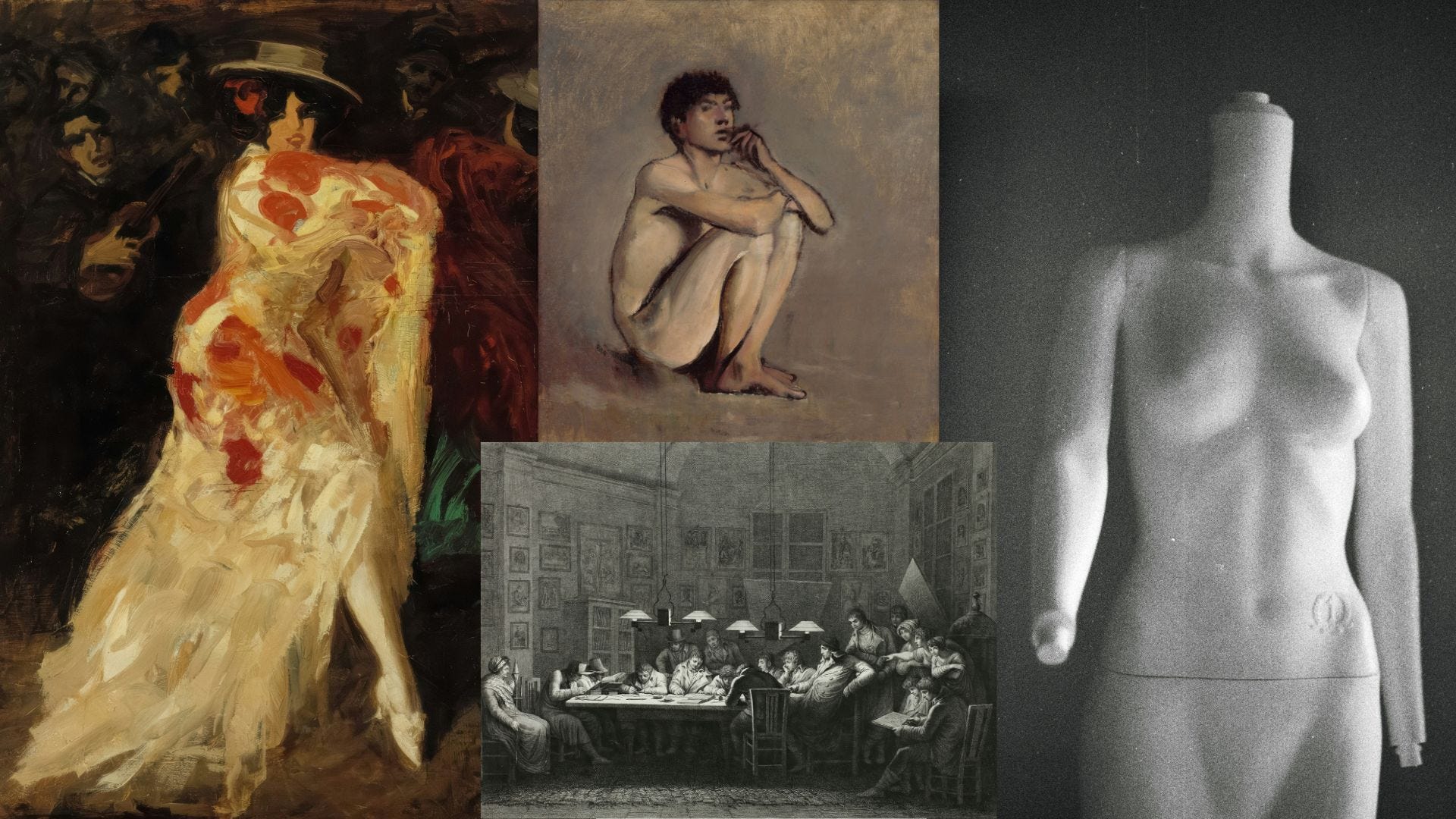
Taylorism is a word that, once you start looking for it, appears everywhere.5 Not surprising, maybe, in a world where productivity has never enjoyed this much airtime, though I don’t see any productivity influencers rushing to credit scientific management when they are advising you to time-block your mornings.
Here’s the thing: like most trends, there’s something to it. Picture a steel mill in the 1880s. Every worker doing the same job in a wildly different way, all vibes, no system, nobody telling them there might be a better approach, no standardization. Now someone walks in, watches long enough, times it, breaks it into smaller steps, measures every variation, and comes to the conclusion that through empiricism, we can get through the universal, natural laws that govern production.
And if it works for steel, we can scale, measure, and optimize human labor just like timber yield. Scientific management is then the systematic study of how work is performed, using observation, timing, and measurement to identify the single most efficient method and impose it universally, replacing worker intuition with engineered process. The body could be rationalized, stripped of all the messy, unnecessary complexity and reduced to its controllable parts.
In the Taylorist factory, only someone outside and above the display can fully appreciate it as a totality; the individual participants at ground level are small molecules within an organism whose brain is elsewhere.
Even though a post on Foucault’s Discipline and Punish is coming, I can’t help but make a link to this fantastic6 book here:
There may be a ‘knowledge’ of the body that is not exactly the science of its functioning, and a mastery of its forces that is more than the ability to conquer them: this knowledge and this mastery constitute what might be called the political technology of the body.
Foucault is all about the relationship between power and knowledge and how they produce each other. Discipline doesn’t merely constrain the body, it generates an apparatus of observation, measurement, and classification around it. One measures the worker to optimize him; in optimizing him, one learns more about him; in learning more, one can control more precisely. The product of this process is the docile body, a body that internalizes its own supervision and regulates itself.
Foucault and Scott have some overlap, though. Highly simplified: Scott talks about what gets destroyed in simplification, and Foucault maps what is constructed in its place.
What gets destroyed, Scott laments, is metis7: the practical, local, embodied knowledge that can’t be written down. The sailor who knows the wind and exactly when he will or won’t capsize. The farmer who knows his land and how weather patterns affect it in weird ways. The worker who knows his machine even when the lights in the factory go out.
The kind of knowledge required in such endeavors is not deductive knowledge from first principles but rather what the Greeks of the classical period called metis. Usually translated, inadequately, as “cunning,” metis is better understood as the kind of knowledge that can be acquired only by long practice at similar but rarely identical tasks, which requires constant adaptation to changing circumstances.
Taylorism was, in this sense, a direct attack on metis. The whole point was to take the knowledge out of the worker’s hands and into the manager’s. Once the movements were timed and codified, the worker didn’t need to know anything. The body had been made legible, and in being made legible, it had been made replaceable.
The factory did not just do this to the factory worker, but the state also did this to the citizen. It could only act on what it could see, and it could only see what it had made legible. So the state set about making people legible through family names, censuses, birth certificates, identity cards. Each one a reduction of a person, with all their local complexity and relational context, into something that could be counted, sorted, and taxed. Not always bad, of course:
An illegible society is a hindrance to any effective intervention by the state, whether the purpose of that intervention is plunder or public welfare.
But, what escapes the state’s view is everything that can’t be acted upon. The rationalized body is not the worker. The data point is not the person. And every time the abstraction was mistaken for the reality, something is lost through the same indifference the forester showed to everything in the forest that wasn’t timber.
1 final quote
Administrative man recognizes that the world he perceives is a drastically simplified model of the buzzing, blooming confusion that constitutes the real world. He is content with the gross simplification because he believes that the real world is mostly empty-that most of the facts of the real world have no great relevance to any particular situation he is facing and that most significant chains of causes and consequences are short and simple.
- Herbert Simon
The Germans also have Verschlimmbessern: to make something worse in the act of trying to improve it. Similarly fitting.
The retrospective in question:
Another one of Le Corbusier’s ideas was Plan Voisin (1925), depicted in the image, a radical, unrealized urban proposal to demolish two square miles of historic central Paris and replace it with 18, 60-story glass cruciform towers set in a sparse, green grid. The city of Paris (surprisingly) declined.
Neither Chandigarh or Brasilia was fully Le Corbusier’s project. Chandigarh was Nehru’s political vision, Le Corbusier was brought in after the original planner was replaced. Brasilia was designed by Lúcio Costa (urban plan) and Oscar Niemeyer (buildings). But the lineage is pretty direct: Niemeyer started out as Le Corbusier’s draftsman in Rio, and when Le Corbusier left Brazil, his changes to the design so impressed Costa that he was handed leadership of the whole project. Later they reunited to build Brasilia together.
Neil Postman for example discusses Taylorism in Technopoly (1992), stating that: “Taylor’s book The Principles of Scientific Management, published in 1911, contains the first explicit and formal outline of the assumptions of the thought-world of Technopoly. These include the beliefs that the primary, if not the only goal of human labor and thought is efficiency; that technical calculation is in all respects superior to human judgement; that in fact human judgement cannot be trusted, because it is plagued by laxity, ambiguity, and unnecessary complexity; that subjectivity is an obstacle to clear thinking; that what cannot be measured either does not exit or is of no value; and that the affairs of citizens are best guided and conducted by experts” (p.51) and “in the work of Frederick Taylor we have, I believe, the first clear statement of the idea that society is best served when human beings are placed at the disposal of their technique and technology” (p.52)
Something similar, perhaps, to Michael Polanyi’s tacit knowledge: knowledge that is acquired through practice and that cannot be articulated explicitly.
I absolutely loved your takeaways and thoughts on Scott. Can't wait to hear about Foucault now...